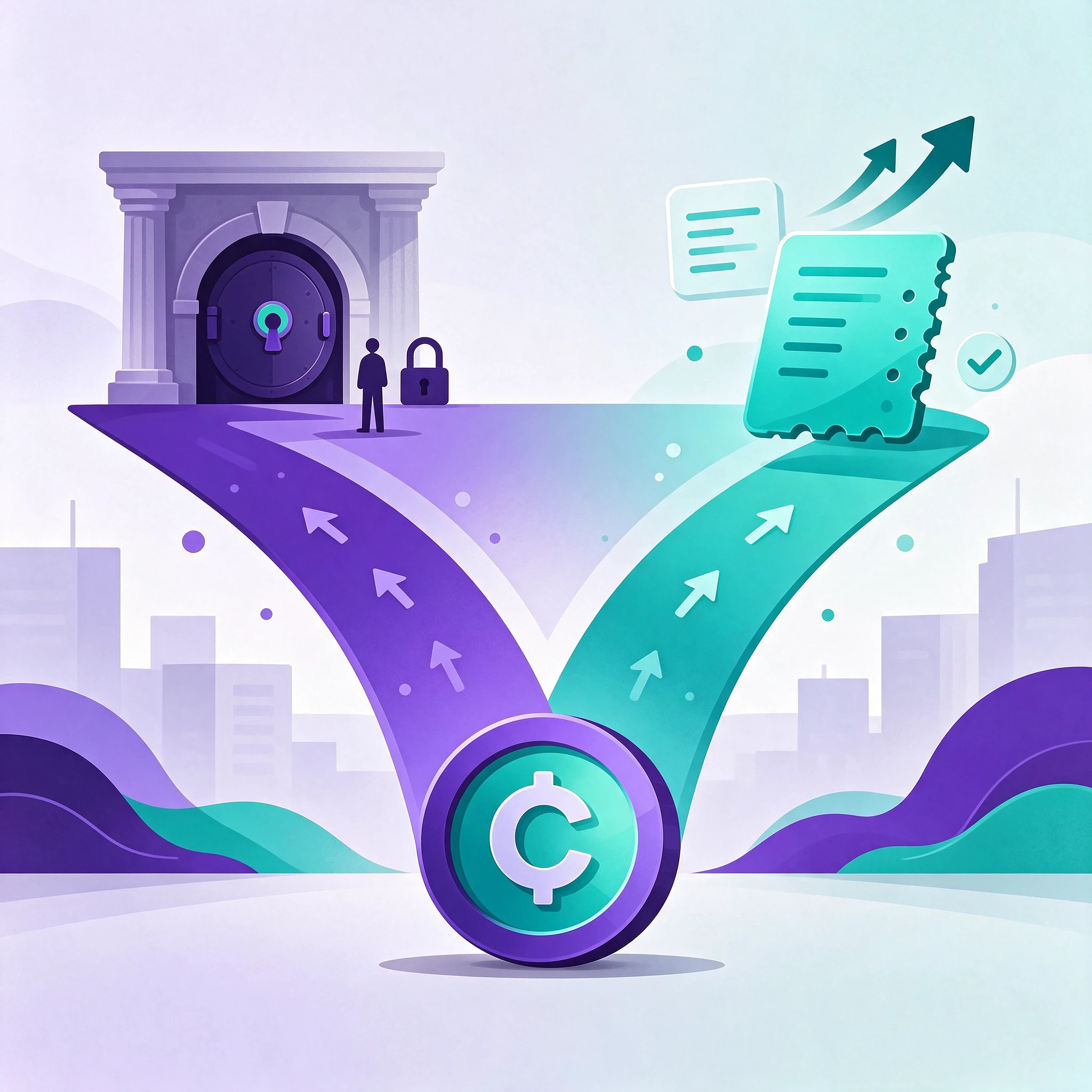
How a bridge works
A bridge connects two networks with smart contracts and, in many designs, a set of validators or relayers. In a common design you lock the coin on the source network and receive a wrapped version on the destination network, or the coin is burned on one side and released on the other. You sign the transactions from your own wallet. The Ethereum documentation describes the main designs and their trade-offs.
How the exchange route works
You deposit the coin to an exchange on network A, then withdraw the same coin on network B. In between, the exchange holds your funds. If the coin is not available on the target network, you swap it first, which adds a trading fee and a spread.
Side by side
- Custody. Bridge: you keep control until the contract takes the funds. Exchange: the platform holds your funds during the transfer.
- Cost. Bridge: a bridge fee plus network fees on both chains. Exchange: a withdrawal fee, and a trading fee if you swap.
- Speed. Bridge: from minutes to much longer, depending on the design. Exchange: depends on deposit confirmations, withdrawal processing and any security checks.
- Access. Bridge: no account needed, but you need gas on the destination chain. Exchange: requires an account, possibly with identity verification.
- Main risks. Bridge: contract exploits, fake bridge sites, wrapped tokens that lose value if the bridge fails. Exchange: custodial risk, withdrawal limits or delays, wrong network or memo.
When a bridge makes sense
A bridge is practical when you want to use an application on another network and do not want to involve an exchange. Prefer bridges that are widely used, audited and linked from the official site of the network or application you are going to use.
When the exchange route makes sense
The exchange route avoids smart contract approvals and fake bridge pages. It can suit a transfer of a major coin that the exchange supports on both networks. Check the supported networks and the withdrawal fee before you start, and read How to Send Crypto to Another Wallet Without Losing It.
A safe checklist
- Open the bridge only from the official site of the project, not from an advertisement or a message.
- Check the source network, the destination network and the exact token before you confirm.
- Send a small test amount first.
- Keep a little of the native coin on the destination network to pay gas.
- Review and revoke unneeded token approvals afterwards (see Token Approvals and How to Revoke Them Safely).
- Remember that bridges are a frequent target of attacks (see Layer 2 Networks Explained for Beginners).
If you choose the exchange route, accounts registered through our referral link return part of the trading fees as cashback on any swap you make along the way.
This article is educational and is not investment advice. Crypto assets carry a high risk of loss.
Get part of your trading fees back
Open the Telegram bot, link your exchange account and follow your cashback balance.