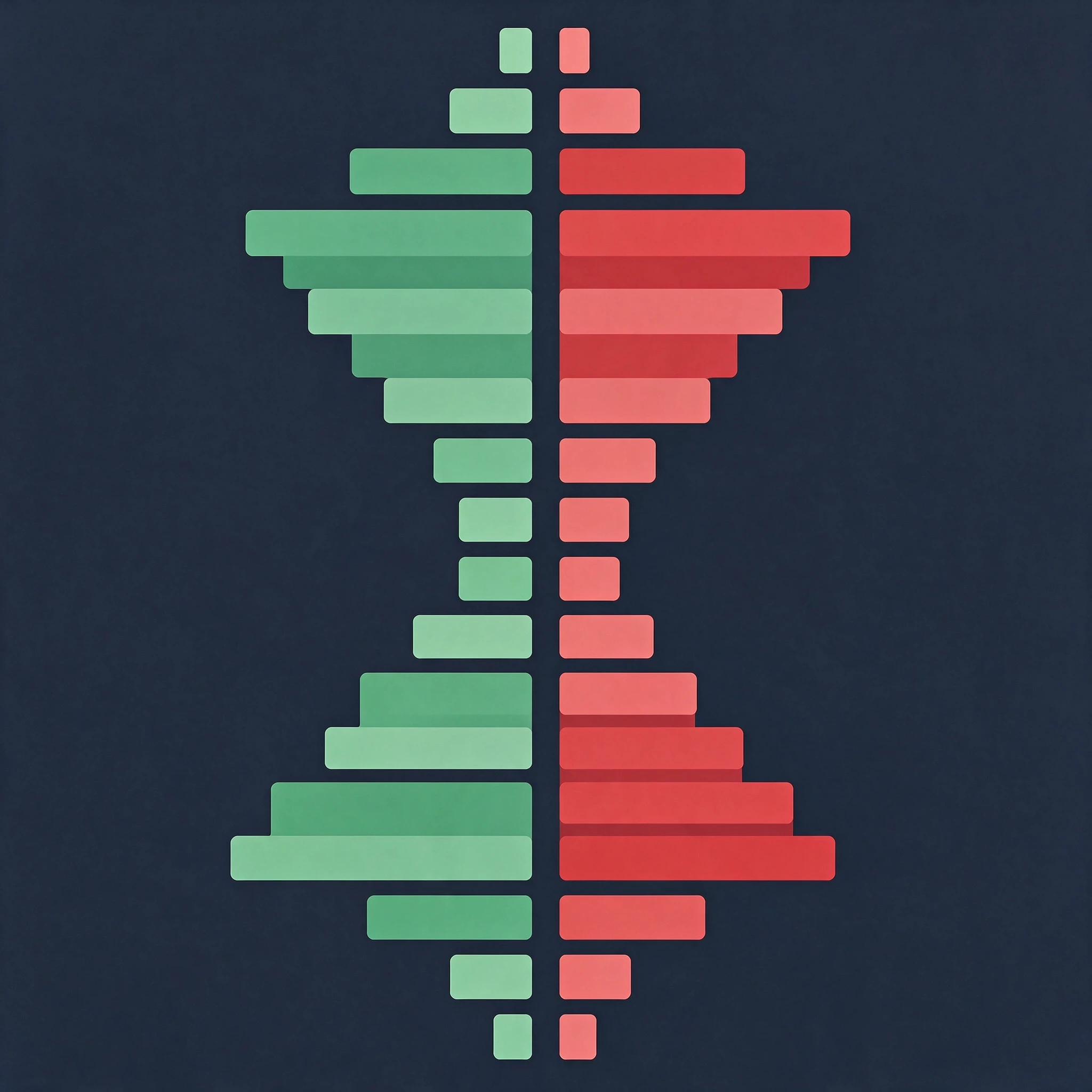
What an order book is
An order book is a live list of orders waiting to be filled. Buy orders are called bids and sit on one side, sell orders are called asks and sit on the other. The highest bid and the lowest ask are the best prices available right now, and they are the numbers that a market order meets first.
The spread
The spread is the gap between the best bid and the best ask. If the best bid is 99.95 and the best ask is 100.05, the spread is 0.10, or about 0.1% of the price. Buying at market and selling right back at market costs you that gap, before any fee.
Liquid pairs usually have a tight spread. A wide spread is a direct cost of trading and a sign that few people are quoting prices.
Depth
Depth shows how much size is waiting at each price level. Imagine the ask side looks like this:
- 100.05: 2 coins
- 100.10: 3 coins
- 100.30: 10 coins
A market order to buy 4 coins takes 2 at 100.05 and 2 at 100.10, so the average price is 100.075. A market order for 10 coins reaches into the 100.30 level and the average price is worse. The thinner the book, the faster the price moves against you as your order grows.
Many exchanges also draw a depth chart, which adds up the orders cumulatively. A steep wall on the chart means a large amount of size at one price, while a flat stretch means price can move quickly through that area.
How orders fill
- A market order takes the best available orders and walks through the book until it is filled. It pays the taker fee and can suffer slippage (see Slippage on Bybit and Why Market Orders Cost More Than You Think).
- A limit order sits in the book at your price until someone takes it. If it does not fill immediately it is a maker order, which usually pays a lower fee (see How to Place Your First Limit Order Step by Step).
What the book cannot tell you
- Orders can be cancelled at any moment. Large orders placed only to look strong and removed before they fill are a known tactic, often called spoofing.
- The book changes many times per second, so a screenshot is stale almost at once.
- Hidden or iceberg orders show only a part of their real size.
- It shows intentions, not outcomes. It cannot predict where price will go.
A quick pre-trade check
- Look at the spread and compare it with your expected profit per trade.
- Add up the depth you would consume with your order size.
- If your order would take more than a few levels, use a limit order or split it into parts.
- For small coins, also read How to Check Liquidity Before You Buy a Small Coin.
A general description of the structure is on Wikipedia. Since spread and fees are part of every order you place, it helps that accounts opened through our referral link return part of the trading fees as cashback.
This article is educational and is not investment advice. Crypto assets carry a high risk of loss.
Get part of your trading fees back
Open the Telegram bot, link your exchange account and follow your cashback balance.