How it differs from plain savings
A normal savings or staking product pays you for lending or locking coins. A structured product, such as a dual asset product, pays you for selling a kind of option. The high rate is the premium for accepting a risk that is not shown in the headline number. A general description of structured products is on Wikipedia.
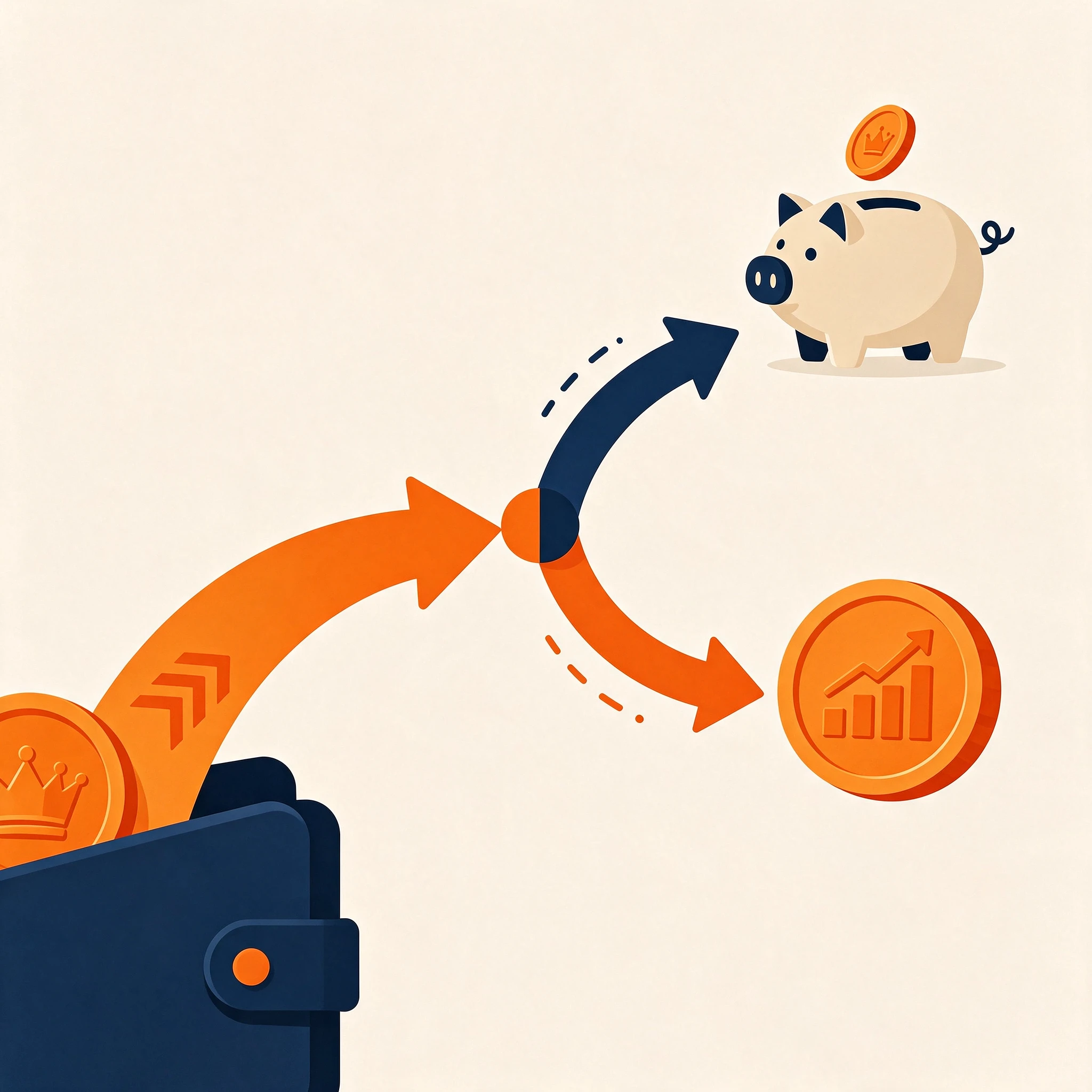
How a dual asset product works
- You deposit asset A, for example USDT.
- You choose a target price for asset B, for example Bitcoin, and a settlement date.
- At settlement, if the market price is on the favorable side of your target, you get your deposit back in USDT plus the interest.
- If the market price is on the other side, your deposit plus interest is converted into Bitcoin at the target price, whatever the market price is at that moment.
A worked example
The numbers are illustrative. You deposit 1,000 USDT for 7 days with a target buy price of 60,000 for Bitcoin and an advertised rate of 40% per year.
- Interest for 7 days is 1,000 x 0.40 x 7 / 365, which is about 7.67 USDT.
- If Bitcoin is above 60,000 at settlement, you receive 1,007.67 USDT. You earned 0.77% in a week.
- If Bitcoin is at 55,000 at settlement, your 1,007.67 USDT is converted at 60,000 and you receive about 0.0168 BTC. At the market price of 55,000 that is worth about 924 USDT. You are down about 76 USDT, which is far more than the interest you earned.
APR is not a savings rate
The advertised percentage is an annualized figure for a very short period. It is not a rate you can expect to receive for a year, and it does not include the possible conversion loss. Compare it with the move in the target price you are exposed to, not with a bank rate or with ordinary earn products (see Flexible vs Fixed Savings Products on Exchanges).
Who it may suit
A product like this may suit someone who genuinely wants to buy Bitcoin at the target price and would be happy with that outcome. It does not suit someone who treats it as a safe place to park money. If your main goal is stability, read how stablecoins can fail too (see Stablecoins Explained and What Can Make Them Lose Their Peg).
A checklist before you subscribe
- Which asset will you receive in each outcome?
- What is the target price and how far is it from the market?
- What is the settlement date and time?
- Can you redeem early, and at what cost?
- What is the minimum amount and are there fees?
- Would you be comfortable holding the other asset at the target price?
Be careful with offers that stress the percentage and hide the conditions (see Crypto Bonus Offers That Are Too Good to Be True). For a reward that does not depend on market direction, accounts registered through our referral link return part of the trading fees as cashback.
This article is educational and is not investment advice. Crypto assets carry a high risk of loss.
Get part of your trading fees back
Open the Telegram bot, link your exchange account and follow your cashback balance.